
Niche vs Designer Perfume: The Real Difference
Niche and designer perfume differ in distribution, price, and formula freedom, not just marketing. Here's what actually separates a $250 niche bottle from an $120 designer one.
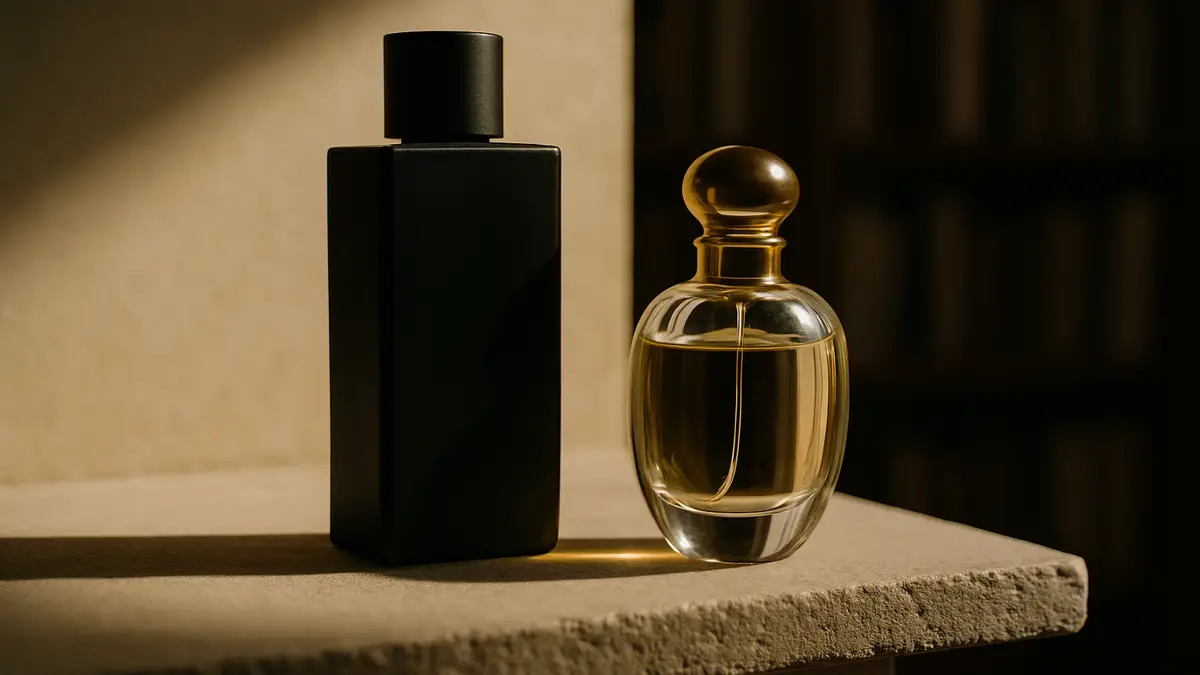
A $250 bottle and an $120 bottle can both be excellent fragrances. The difference between niche and designer isn’t a quality tier, it’s a different business model that happens to produce different smells, different prices, and different shopping experiences.
What actually separates niche perfume from designer perfume?
Distribution and formula freedom are the two real differences, not just price.
Designer perfume comes from major fashion houses (or fragrance conglomerates licensing a fashion brand’s name) and sells through department stores, big-box retailers, and brand sites worldwide. Formulas are built for broad appeal and cost control, which caps how unusual or expensive the ingredients can get.
Niche perfume comes from smaller independent houses selling through limited retail partners, often their own boutiques or a handful of specialty stores. Without mass-market pressure, niche perfumers have more room to use costlier materials, take creative risks, and skip the “safe for everyone” formula constraints designer brands work within.
How do niche and designer perfume actually compare?
| Factor | Designer | Niche |
|---|---|---|
| Typical price (50-100ml) | $80-160 | $200-450+ |
| Distribution | Wide, department stores, big-box retail | Limited, boutiques, specialty retailers |
| Formula freedom | Constrained by mass-market cost and appeal | Fewer constraints, more unusual materials |
| Marketing spend | High, celebrity/campaign-driven | Low, relies on word-of-mouth and reviewers |
| Batch consistency | Very high, large-scale production | Varies more, smaller production runs |
| Counterfeit risk | Higher, popular targets | Lower, but not zero |
Neither column is “better” across every row. Designer wins on consistency and access; niche wins on formula freedom and exclusivity.
Does niche perfume last longer than designer?
Not inherently, no. Longevity depends on concentration and formula, not on whether a house is niche or designer. Extrait de Parfum runs 20-40% fragrance oil and typically lasts 8-24+ hours regardless of which category it comes from, while a designer EDP at 15-20% concentration and a niche EDP at the same concentration wear similarly.
Some niche houses do release more extrait-strength options than designer brands typically offer at retail, which is where the longevity reputation comes from. Our EDP vs EDT vs Extrait guide breaks down exactly how concentration drives wear time.
Is niche perfume worth the extra price?
If exclusivity and a formula you won’t smell on everyone else matters to you, yes. Niche houses sell far fewer bottles, so the odds of someone else wearing the exact same scent at the same event drop sharply compared to a designer bestseller.
If your priority is a great-smelling, reliable fragrance at a lower cost per wear, designer is the more rational buy. A $120 designer bottle and a $300 niche bottle can both last a similar number of wears; the niche bottle simply costs more per spray.
Do dupes exist for niche perfume the way they do for designer?
Yes, and this is one of the more useful facts in the category: dupe houses target expensive niche bottles specifically because the price gap gives them the most room to compete. Baccarat Rouge 540 and Santal 33 are two of the most frequently dupe’d niche fragrances for exactly this reason.
Our perfume dupes guide covers houses that focus on niche-scent alternatives, which is often a bigger dollar savings than dupe-shopping a designer scent.
Which should you buy first, niche or designer?
Start with designer if you’re still learning what scent families work on you. The $80-160 price band gives you more room to experiment across a few bottles before you’ve narrowed down your preferences, and the wide distribution means returns and exchanges are easier.
Move to niche once you know your lane, whether that’s oud, gourmand, or something specific a designer catalog doesn’t cover well. At that point the extra cost buys something designer genuinely can’t: a formula built without a mass-market ceiling on it.
Can you try niche perfume before spending $200+?
Yes, and you should. A 2-10ml decant of a niche fragrance typically runs $8-15, a small fraction of a full $200-450 bottle, and lets you test how the scent actually develops on your skin over a full day rather than relying on a two-second sniff at a counter.
This matters more with niche than designer because return policies on opened niche bottles are often stricter, and boutique retailers carrying niche lines are harder to find than a department store carrying a designer name. Testing first with a decant avoids sending back an expensive bottle that smelled great on a card but not on you.
Does niche perfume use noticeably different ingredients than designer?
Often, yes, though it varies by house. Niche perfumers frequently work with higher-cost naturals, unusual materials like raw oud or rare florals, and less dilution overall, since they aren’t optimizing the formula for a specific retail price point the way designer houses do.
That said, “niche” isn’t a legal or regulated category, so ingredient quality still depends on the individual house rather than the label alone. A niche brand chasing a lower price point can cut corners just as a designer brand aiming for a premium line can use excellent materials. Judge the specific bottle, not just which category it falls into.
Whichever category you’re buying in, the same counterfeit risks apply once a listing looks too cheap for its category. Our guide to spotting fake perfume covers the checks that hold regardless of whether the bottle says niche or designer on the box.
Frequently asked questions
Quick answers to what readers ask us most
Is niche perfume always better quality than designer?
Not automatically. Niche houses have more freedom to use costlier or unusual ingredients since they aren't formulating for mass-market appeal, but quality still varies house to house. Some designer fragrances use excellent materials, and some niche releases are thin or poorly blended.
Why is niche perfume so much more expensive?
Smaller production runs, higher-cost ingredients in many cases, and no economy of scale from mass retail distribution. A niche house selling a few thousand bottles a year can't spread costs the way a designer brand selling millions can, which pushes the price to $200-450 and up.
Can you get niche-smelling scents without the niche price?
Yes, through dupes built specifically to reference niche bottles like Baccarat Rouge 540 or Santal 33. See our perfume dupes guide for houses that focus on niche-scent alternatives specifically.
Are niche perfumes counterfeited as often as designer ones?
Less often, since counterfeiters target high-volume bestsellers where the payoff is bigger. Niche still gets faked occasionally, so the same authentication checks apply; see our guide to spotting fake perfume.